Sailing Into Year Ten-The Follow-Up
Ten Years Later: Cruising as a Below-the-Knee Amputee – The Follow-Up
A few weeks ago, I wrote about preparing for a Caribbean cruise as a below-the-knee amputee.
I talked about the things that were running through my mind before we left: What if something happened to my prosthetic? How would my residual limb handle all the extra walking? Would balance on a moving ship be an issue? Would I be able to keep up without becoming a burden to my family?
Now that the trip is behind us, I can say this:
I’m really glad I went.
The trip was successful, fulfilling, and full of memories I’m grateful we made. But it also reminded me that traveling as an amputee doesn’t necessarily mean doing everything exactly the same way everyone else does.
Sometimes it means adapting.
And sometimes it means knowing when to stop.
The 12,000-Step Day
One of our port days turned into a big walking day.
More than 12,000 steps.
For some people, that may not sound extraordinary. For a below-the-knee amputee, especially while navigating unfamiliar terrain, heat, crowds, inclines, sandy beaches and everything else that comes with a port day, those steps add up differently.
By the end of the day, I knew I had pushed my residual limb.
And the next morning, it was very clear that I needed to listen to my body.
So I took a rest day.
If I’m being truthful, that probably challenged me mentally more than physically.
One of the things I wrote about before the cruise was not wanting to become a burden or cause my family to change plans because of me. There is a part of me that always wants to push through.
Ten years into being an amputee, I’ve gotten pretty good at telling my mind not to quit when something is difficult.
What I’m continuing to learn is that there is also strength in knowing when pushing through isn’t the smartest decision.
Resting wasn’t giving up on the trip.
Resting was protecting the rest of it.
Adaptation Doesn’t Mean Missing Out
That became one of my biggest takeaways from the cruise.
There were things I had to think about differently.
There were times I needed to sit down.
There were wet surfaces where I moved a little slower.
There were long walks where I paid closer attention to how my residual limb was feeling.
There were situations where I had to think ahead about distance, terrain, accessibility, and whether I wanted to wear my prosthetic in certain environments.
And yes, there was a day when my family went on with part of the vacation while I gave my leg the recovery time it needed.
But none of that ruined the experience.
It was simply part of the experience.
I still explored new places.
I still spent time with my wife and daughter.
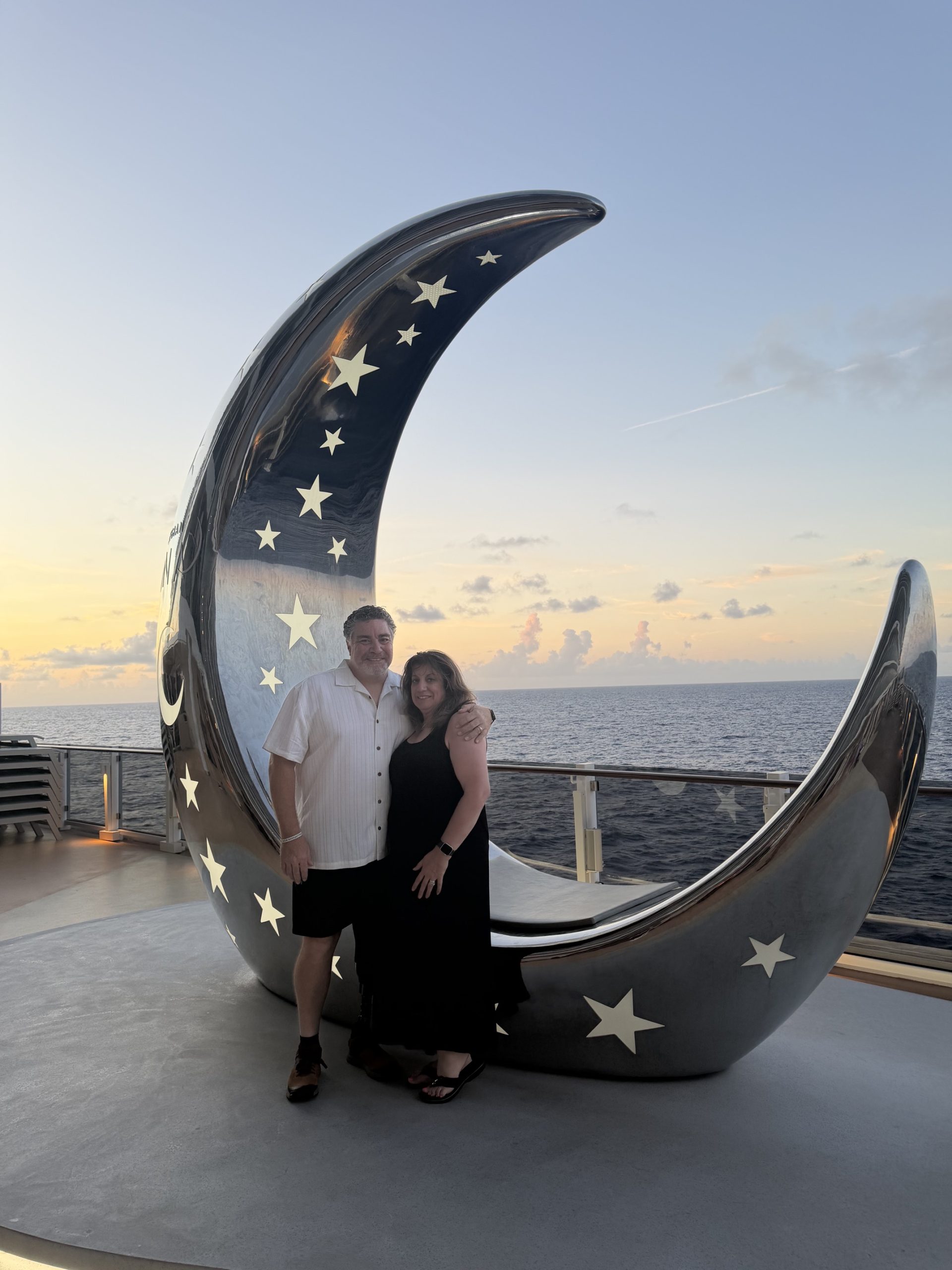
I still enjoyed the ship, the food, the sunsets, and the Caribbean.
I still celebrated birthdays.
I still made memories.
I just did some of it differently.
The Things I Worried About
Thankfully, my prosthetic made it through the trip without any major problems.
All the extra supplies, sleeves, socks, tools, and backup items I packed mostly stayed packed — which is exactly how you want it.
The ship movement wasn’t nearly as difficult as I had imagined, although I was definitely more conscious of stairs, wet decks, and my footing.
The walking was probably the biggest physical challenge, just as I expected it would be.
But the difference between worrying about something beforehand and actually experiencing it is that once you’re there, you adapt.
You figure it out.
That’s something amputees become pretty good at.
Redefining What Success Looks Like
Before the trip, part of me probably viewed success as keeping up with everyone else for seven straight days.
I don’t think that anymore.
Success was going.
Success was participating.
Success was recognizing when my body needed recovery and making the decision that would allow me to continue enjoying the trip.
Success was not allowing one rest day to overshadow everything I was able to do.
There is a difference between limitations and defeat.
Having to modify something doesn’t mean you failed.
Sometimes adapting is exactly what allows you to succeed.
Would I Do It Again?
Absolutely.
Cruising may still not become my favorite way to travel, but being an amputee would not stop me from doing it again.
I’d probably plan port days a little differently.
I might be more intentional about scheduling heavier walking days and lighter days.
I would still overpack my prosthetic supplies.
I would still think about accessibility before excursions.
And I would probably be quicker to give myself permission to rest when my body tells me it needs it.
But I would go.
Because the lesson from this trip wasn’t that traveling with a prosthetic is easy.
It was that it’s possible.
It just sometimes requires flexibility, preparation, and the willingness to adapt.
Ten years ago, I was learning how to walk again.
Ten years later, I walked more than 12,000 steps through a Caribbean port, woke up the next day, realized my residual limb had earned a break, and took one.
Then I got back to enjoying the vacation.
Maybe that’s what progress really looks like.
Not pretending the challenges aren’t there.
Not allowing them to define what you can do either.
And continuing to say yes to experiences that make life worth living.


Related Posts
Resolutions – Why Wait?
2020 and 2021 felt like they were one long challenging year and as the end…
27 September, 2026
One For The Win Column
When I now hear the words “won’t work”, “difficult”, or “can’t”, it is…
27 September, 2026
Leave A Comment